Understanding what is microcirculation and why it matters begins with the body’s smallest blood vessels. Arterioles, capillaries, and venules deliver oxygen and nutrients to living tissue. They also remove carbon dioxide and metabolic waste. This network is smaller than a human hair in many areas. Yet, its performance can influence wound healing, skin temperature, muscle recovery, and organ function. For buyers, the subject is not merely technical. It affects product value, safety, and clinical credibility.
The World Health Organization’s World Health Statistics 2024 reports that cardiovascular diseases remain the leading global cause of death, causing an estimated 17.9 million deaths annually. The American Heart Association’s 2024 Heart Disease and Stroke Statistics update also highlights the continuing burden of vascular disease worldwide. These figures do not prove that every circulation product works. They show why vascular performance deserves careful attention. Buyers should examine measurement methods, study populations, follow-up periods, and adverse-event reporting. A polished brochure is not enough.
Look for evidence.
A useful device should explain what it measures. It should identify whether results reflect blood flow, tissue oxygenation, temperature, or another proxy. Buyers can also review relevant quality systems, such as ISO 13485, and safety standards appropriate to the product category. However, standards do not replace clinical evidence. The term “microcirculation” is sometimes used too loosely, including by experienced marketers. That deserves reflection. In real purchasing decisions, a patient’s cold fingertip, delayed wound closure, or changing skin color may matter more than an impressive laboratory graph. Reliable buying decisions connect measurable outcomes with practical user needs.
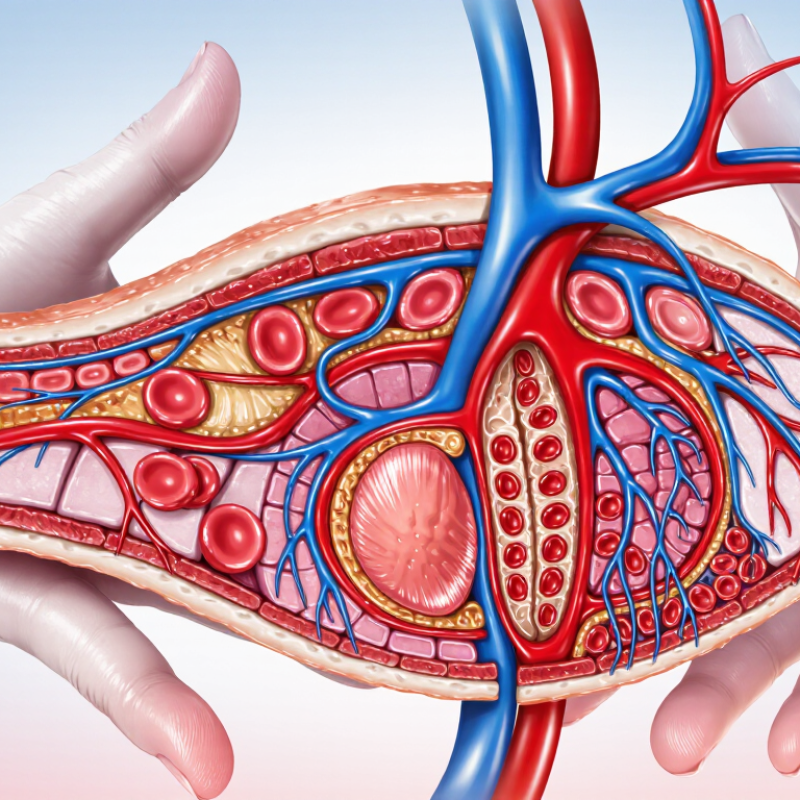
What Is Microcirculation and Why It Matters for Buyers?
Microcirculation Defined: Vessels Typically Below 100 Micrometers
Microcirculation covers the smallest blood vessels, typically below 100 micrometers in diameter. This network includes arterioles, capillaries, and venules. For scale, human hair is often about 70 micrometers wide. Capillaries are much narrower, commonly measuring 5–10 micrometers, according to the National Library of Medicine’s vascular physiology reviews.
These vessels deliver oxygen, nutrients, and medication to individual tissues. They also remove carbon dioxide and metabolic waste. The American Heart Association’s scientific literature links microvascular dysfunction with hypertension, diabetes, kidney disease, and cardiovascular risk. That connection matters to buyers evaluating diagnostic tools, monitoring systems, or clinical services.
Look beyond headline specifications. A device may claim “microcirculation monitoring,” yet measure skin temperature, blood flow, or oxygen signals indirectly. Those are not identical outcomes. Ask about vessel-size sensitivity, measurement depth, calibration, repeatability, and validation populations. The International Society for Microcirculation emphasizes that tissue type and measurement method can change results.
Small differences matter.
A useful warning remains: a sub-100-micrometer label does not automatically prove clinical accuracy. I would request peer-reviewed validation data, sample sizes, and error ranges before purchasing. Some marketing language sounds precise, but the underlying measurement may still be limited.
Microcirculation is the movement of blood through small vessels, generally including vessels below approximately 100 micrometers in diameter.
Capillaries are typically about 5–10 μm wide, while arterioles and venules commonly range from approximately 10–100 μm. Red blood cells are about 7–8 μm in diameter, allowing them to pass through narrow capillaries and support oxygen and nutrient exchange. For buyers, vessel size is an important distinction when evaluating claims related to circulation, tissue perfusion, or microvascular support.
Microcirculation is the body’s smallest transport system. Its capillaries usually measure about 5–10 micrometers wide, according to the National Institutes of Health’s NCBI Bookshelf. That is close to the diameter of a red blood cell, often around 7–8 micrometers. Cells may therefore bend, slow, and pass through these vessels almost single file. Tiny changes matter. A small reduction in flow can limit oxygen delivery to skin, muscle, or healing tissue.
This scale changes how buyers should assess microcirculation equipment. A device that measures surface temperature alone may miss delayed blood movement. Better systems may combine blood-flow signals, tissue oxygen estimates, and repeat measurements. The American Heart Association’s 2024 statistical update reports that cardiovascular disease remains a leading global health burden, affecting approximately 1 in 3 adults worldwide. That figure supports careful vascular assessment, but it does not validate every commercial sensor. Measurement quality varies.
Look for stated resolution, sampling depth, calibration methods, and results from peer-reviewed validation studies. Ask whether testing included different skin tones, temperatures, ages, and circulation conditions. The World Health Organization’s 2023 hypertension report estimates that 1.28 billion adults aged 30–79 live with hypertension. Microvascular stress may accompany that burden, yet one reading cannot diagnose it. I would treat an attractive dashboard cautiously. Clean graphs can hide noisy signals. Real purchasing decisions need repeatability, transparent limitations, and trained interpretation.
What Is Microcirculation and Why It Matters for Buyers?
Microcirculation describes blood flow through arterioles, capillaries, and venules. These vessels nourish skin, muscles, nerves, and internal organs. Capillaries deliver oxygen and glucose close to individual cells. They also carry carbon dioxide and other metabolic waste back toward larger veins. This exchange happens across extremely thin vessel walls. Small vessels, important work.
When circulation is healthy, tissues receive supplies at the right moment. Picture warm fingers, pink nail beds, and a quick return of color after gentle pressure. Cold exposure, dehydration, illness, or vascular problems can slow this response. However, appearance alone cannot confirm healthy microcirculation. A buyer should question products that promise dramatic results from one visible sign. Ask how the device measures blood flow, under what conditions, and against which clinical reference.
Reliable assessment may include capillary refill, skin-temperature readings, laser Doppler methods, or specialist examination. Each method has limits. Room temperature, movement, stress, and recent exercise can change readings. This is where many explanations become too confident. A single measurement is not a diagnosis. Buyers should look for transparent testing, clear instructions, and evidence from qualified medical sources. They should also check whether the product measures oxygen delivery, blood volume, temperature, or something else. Those terms are related, but they are not interchangeable.
| Microcirculatory Component | Typical Scale or Physiological Range | Primary Biological Function | Exchange or Transport Role | Why the Dimension Matters for Buyers |
|---|---|---|---|---|
| Arterioles | Approximately 10–100 µm in diameter | Regulate blood flow and pressure entering capillary beds through smooth-muscle constriction and dilation. | Control how much oxygenated blood reaches local tissues. | A suitable measurement system should detect changes in vessel tone and local perfusion, not only large-vessel pulse signals. |
| Capillaries | Approximately 5–10 µm in diameter; many are close to the size of a red blood cell. | Provide the main interface between blood and surrounding tissue. | Enable diffusion of oxygen, glucose, amino acids, hormones, carbon dioxide, and metabolic by-products. | Products intended to assess microcirculation should account for very small vessel dimensions and slow, heterogeneous flow. |
| Red Blood Cells | Approximately 7–8 µm in diameter; flexible biconcave cells. | Carry oxygen using hemoglobin and transport part of the carbon dioxide load. | Pass through narrow capillaries while releasing oxygen along an arterial-to-tissue gradient. | Relevant technologies should distinguish blood-cell movement or oxygenation from simple surface color or pulse measurements. |
| Venules | Post-capillary venules begin at roughly 10–50 µm and merge into larger venules. | Collect deoxygenated blood and contribute to fluid and immune-cell movement. | Return carbon dioxide and other dissolved waste products toward larger veins; participate in inflammatory fluid exchange. | A buyer should check whether a solution reflects venous congestion and fluid shifts, rather than reporting arterial delivery alone. |
| Oxygen Delivery | At rest, tissues typically extract about 20–25% of delivered arterial oxygen; extraction rises when demand increases. | Matches oxygen supply with cellular energy requirements. | Oxygen diffuses from hemoglobin-rich blood into cells for aerobic energy production. | Look for measurements that can reveal changes in tissue oxygen availability, especially during exertion, cooling, compression, or disease. |
| Nutrient Delivery | Exchange occurs across capillary walls over very short diffusion distances, often less than 100 µm to nearby cells. | Supplies glucose, amino acids, electrolytes, fatty acids, and other substrates. | Uses diffusion, filtration, and carrier-mediated transport across the vessel wall. | Useful systems should consider tissue location, temperature, hydration, and local perfusion because nutrient delivery is not uniform throughout the body. |
| Waste Removal | Carbon dioxide and other soluble wastes move down concentration gradients from cells into blood. | Prevents local accumulation of metabolic by-products. | Carbon dioxide is transported mainly as bicarbonate, with smaller amounts dissolved in plasma or bound to hemoglobin. | When evaluating a product, separate oxygen-delivery indicators from measures that claim to represent metabolic waste clearance. |
| Perfusion Heterogeneity | Flow varies between tissues and can change with temperature, posture, exercise, stress, inflammation, and medication. | Allows local blood supply to adapt to changing tissue demand. | Creates differences in oxygen and nutrient availability even within the same organ. | Prioritize repeatability, environmental controls, and trend tracking over a single isolated reading. |
| Measurement Quality | Key factors include spatial resolution, temporal resolution, skin contact, temperature control, motion sensitivity, and calibration. | Determines whether a reading reflects local microvascular behavior or unrelated surface effects. | Supports assessment of vessel density, red-cell motion, perfusion, oxygenation, or flow-related trends. | Buyers should request validation data, repeatability results, defined measurement conditions, and clear limits of interpretation. |
Microcirculation describes blood movement through tiny vessels near the skin and tissues. For buyers, it is more than a technical term. It helps reveal whether a device captures meaningful physiological signals. Perfusion Index estimates pulse strength at the sensor site. A higher value often supports more stable readings, but it is not a direct diagnosis.
Blood flow measurements can show circulation changes during rest, movement, or temperature shifts. Oxygen saturation, commonly written as SpO2, indicates the percentage of oxygen-carrying blood. Buyers should check accuracy across different skin tones, ages, and motion conditions. A number that looks precise may still be unreliable.
I have found that repeated measurements matter more than one impressive reading. Even then, real-world testing can expose gaps.
Tips: Compare readings with a validated reference device. Test warm and cool hands. Check results after gentle movement. Review response time, signal quality, and data consistency. Ask for independent validation, not only laboratory claims. Also examine how the device handles weak perfusion, because ideal conditions rarely last. Metrics need context. A low Perfusion Index may reflect cold fingers, loose placement, or limited circulation rather than device failure. Another explanation may fit better.
Microcirculation describes blood flow through tiny vessels supplying skin, muscles, and organs. It is difficult to measure outside a laboratory. This makes product claims easy to overstate. The IDF Diabetes Atlas reports that 537 million adults lived with diabetes in 2021. Diabetes can damage small blood vessels, but that statistic does not prove a circulation product will help.
Buyers should look for controlled human studies, not only attractive before-and-after images. Useful methods include laser Doppler flowmetry, nailfold capillaroscopy, and validated skin-perfusion testing. Each measures something different. A warmer hand is not automatically healthier tissue. The American Heart Association also stresses that microvascular dysfunction involves complex biological pathways, not one simple reading. That distinction matters.
Safety deserves equal attention. Products containing stimulatory herbs may interact with blood-pressure, diabetes, or anticoagulant medicines. Wearable devices can produce misleading results when sensors shift, skin is cold, or pressure is uneven. Check whether the measuring method has independent validation and clear accuracy limits. Ask who performed the study, how many people joined, and whether results lasted beyond a few hours. Regulatory clearance may address device safety or measurement performance; it may not prove treatment benefit. I would be cautious with claims promising “detox,” guaranteed vessel repair, or universal improvement. Those phrases sound confident. The evidence may not be. Some purchasing decisions remain imperfect, especially when companies disclose little about testing conditions.
Microcirculation is blood movement through arterioles, capillaries, and venules. It supplies oxygen and nutrients to nearby cells. It also removes carbon dioxide and metabolic waste. Small vessels, important work.
Capillaries usually measure about 5–10 micrometers wide. Red blood cells are often about 7–8 micrometers wide. Cells may bend and move through capillaries almost single file.
Surface temperature alone may miss delayed blood movement. A stronger system may combine blood-flow signals, tissue oxygen estimates, and repeated readings. Measurement depth shows which tissue region the device actually assesses.
The Perfusion Index estimates pulse strength at the sensor site. A higher value may support more stable readings. It is not a direct diagnosis. Context matters.
No. Blood flow describes movement through vessels. Oxygen saturation describes oxygen-carrying blood as a percentage. Temperature reflects heat at the measured area. These signals are related, but not interchangeable.
Room temperature, movement, stress, dehydration, illness, and recent exercise can affect results. Cold fingers may produce weaker signals. Loose sensor placement can also distort readings. Not always a device failure.
Check resolution, sampling depth, calibration methods, response time, and signal quality. Look for independent, peer-reviewed validation studies. Testing should include varied skin tones, ages, temperatures, and circulation conditions.
No. One reading cannot diagnose microvascular disease or another medical condition. Repeat measurements provide better context. A trained professional should interpret concerning or persistent results.
Compare repeated readings under similar conditions. Test warm and cool hands carefully. Measure before and after gentle movement. A neat dashboard can still mislead me.
Check sensor placement, hand temperature, movement, and signal quality. Repeat the measurement after resting. If unusual results continue, seek qualified medical advice. My first explanation may be wrong.
What is microcirculation and why it matters is an important question for anyone evaluating health and wellness products. Microcirculation refers to blood flow through the smallest vessels, typically those below 100 micrometers in diameter. This network includes capillaries that are usually about 5–10 micrometers wide, allowing them to reach individual tissues and support the exchange of oxygen, nutrients, and metabolic waste. Although these vessels are tiny, their performance has a major influence on tissue nourishment and overall physiological function.
For buyers, understanding microcirculation also means knowing which measurements are meaningful. Useful evaluation criteria may include the perfusion index, blood-flow indicators, and oxygen-saturation readings. However, product selection should not rely on attractive claims alone. Buyers should examine the quality of supporting evidence, measurement accuracy, testing methods, user safety, and the limitations of the technology. A thoughtful comparison of these factors can help distinguish informative tools from products that provide unclear or unreliable results.

StavroCare Medical